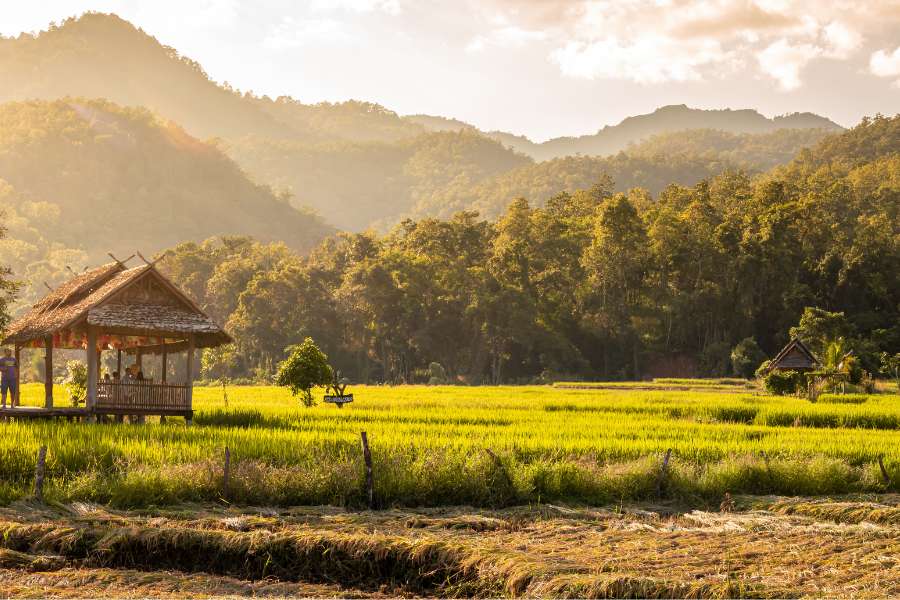
Northern Thailand has long been one of Southeast Asia’s most popular destinations for digital nomads. Among the many places to base yourself, Chiang Mai and Pai stand out for very different reasons. Chiang Mai offers reliable infrastructure, coworking culture, and city convenience, while Pai attracts travelers seeking a quieter, nature-focused lifestyle surrounded by mountains.
For first-time visitors deciding where to stay, the choice often comes down to priorities: productivity or relaxation, community or solitude, convenience or scenery. This guide compares Pai and Chiang Mai across cost, internet reliability, lifestyle, and digital nomad community to help you decide which destination best fits your travel and work style.
Quick Comparison: Pai vs Chiang Mai
| Category | Pai | Chiang Mai |
|---|---|---|
| Overall Cost | Slightly cheaper | Moderate but flexible |
| Monthly Budget | THB 20,000–30,000 | THB 25,000–45,000 |
| Internet Reliability | Good in town, less stable outside center | Excellent across most areas |
| Coworking Spaces | Limited | Extensive options |
| Lifestyle | Relaxed, nature-oriented | Urban, social, convenient |
| Community Size | Small but close-knit | Large international nomad scene |
| Nightlife | Quiet bars and live music | Cafes, bars, markets, nightlife |
| Best For | Slow travel and retreat-style living | Long-term remote work and networking |
Cost of Living
Pai is generally more affordable than Chiang Mai, particularly when it comes to accommodation and daily expenses. Many travelers choose Pai because it allows for a slower lifestyle at a lower monthly cost.
Recent comparisons suggest that living expenses in Pai can be around 5–10% lower than in Chiang Mai depending on accommodation style and spending habits.
Estimated Monthly Budget
| Expense Category | Pai | Chiang Mai |
| Basic Apartment | THB 6,000–12,000 | THB 8,000–18,000 |
| Coworking Space | THB 2,000–4,000 | THB 3,000–6,000 |
| Local Food | THB 4,000–7,000 | THB 5,000–8,000 |
| Scooter Rental | THB 2,500–4,000 | THB 2,500–4,500 |
| Utilities & Internet | THB 1,500–3,000 | THB 2,000–4,000 |
| Estimated Total | THB 20,000–30,000 | THB 25,000–45,000 |
Pai appeals to budget-conscious travelers who prefer guesthouses, bungalows, and simple living. Chiang Mai, however, offers a much wider accommodation range, from inexpensive local apartments to modern serviced condos with gyms and pools.
For digital nomads planning longer stays, Chiang Mai’s larger housing market can make it easier to find monthly rentals with stable WiFi and workspace-friendly setups.
WiFi and Remote Work Infrastructure
For remote workers, internet reliability is often the deciding factor.
Chiang Mai remains one of the strongest digital nomad hubs in Asia largely because of its dependable internet infrastructure. Most cafes, apartments, and coworking spaces offer fast fiber internet suitable for video calls, large uploads, and full-time online work.
Chiang Mai Advantages
- Stable high-speed internet across most neighborhoods
- Numerous coworking spaces
- Backup cafes and work-friendly venues
- Better mobile data coverage
- More accommodation designed for remote workers
Neighborhoods such as Nimmanhaemin and Santitham are especially popular among remote workers because they combine cafes, apartments, and coworking spaces within walking distance.
Pai, by comparison, has improved significantly in recent years, but internet quality can still vary depending on location and weather conditions.
Pai Internet Reality
- Internet is generally reliable in central Pai town
- Speeds may drop outside the town center
- Some accommodations still rely on weaker connections
- Power interruptions can occasionally occur during storms
For travelers whose work depends heavily on Zoom meetings, streaming, cloud backups, or uploading large files, Chiang Mai is usually the safer and more productive choice.
Pai can still work well for freelancers, writers, designers, or remote workers with lighter internet requirements.
Lifestyle and Atmosphere
The lifestyle difference between Chiang Mai and Pai is substantial.
Pai: Slow, Scenic, and Relaxed
Pai is surrounded by mountains, rice fields, waterfalls, and hot springs. The atmosphere feels peaceful and detached from large-city life. Many travelers visit Pai intending to stay a few days and remain for weeks or months.
The town is particularly popular with:
- Slow travelers
- Yoga enthusiasts
- Nature lovers
- Creative freelancers
- Travelers seeking a quieter pace
Daily life in Pai often revolves around cafes, sunset viewpoints, scooter rides, live music, and outdoor exploration.
However, Pai’s relaxed atmosphere can also feel limiting for some long-term visitors. The town is small, amenities are fewer, and entertainment options are relatively limited after extended stays.
Chiang Mai: Comfortable and Convenient
Chiang Mai provides a more balanced urban lifestyle. While it is much larger than Pai, it still feels calmer than Bangkok and offers easy access to mountains, temples, and nature nearby.
Digital nomads often choose Chiang Mai because it combines:
- Reliable infrastructure
- Affordable living
- International food options
- Healthcare access
- Shopping malls and supermarkets
- Active social and networking events
Chiang Mai is generally easier for long-term living because daily conveniences are more accessible. It feels less isolated and more sustainable for remote workers staying several months or longer.
Community and Social Scene
Chiang Mai has one of the most established digital nomad communities in Southeast Asia.
The city offers:
- Frequent networking events
- Language exchanges
- Startup meetups
- Coworking communities
- Skill-sharing workshops
- Large international population
For first-time solo travelers, Chiang Mai can feel easier socially because there are many opportunities to meet other remote workers and expats.
Pai’s community is much smaller but often feels more personal and tightly connected. Many travelers describe Pai as having a stronger “village atmosphere,” where familiar faces quickly become part of daily life.
The best choice depends on personal preference:
- Chiang Mai suits travelers seeking professional networking and social variety.
- Pai suits travelers looking for deeper relaxation and a smaller social circle.
Which Destination Is Better for First-Time Digital Nomads?
Choose Chiang Mai if you want:
- Reliable high-speed WiFi
- Better coworking infrastructure
- A larger digital nomad network
- More apartment choices
- Greater convenience for long-term stays
- Easier access to healthcare and services
Choose Pai if you want:
- Lower overall living costs
- Mountain scenery and nature
- A quieter environment
- Slower daily routines
- A retreat-style atmosphere
- Fewer distractions
For many first-time digital nomads in Thailand, Chiang Mai is often the easier and more practical starting point. Pai works best for travelers who already know they prefer a slower, less urban lifestyle.
Final Thoughts
Pai and Chiang Mai offer two very different digital nomad experiences despite being located in the same region of Thailand.
Chiang Mai remains the stronger all-around base thanks to its dependable internet, larger community, and long-term convenience. It is generally the better option for remote workers whose productivity depends on stable infrastructure and networking opportunities.
Pai, however, offers something Chiang Mai cannot fully replicate: a peaceful mountain-town atmosphere that encourages slower living, creativity, and disconnection from urban stress. For travelers prioritizing lifestyle and nature over maximum productivity, Pai can be an appealing alternative.
Ultimately, the best destination depends on how you balance work, lifestyle, and travel priorities.
FAQs
1. Is Pai cheaper than Chiang Mai for digital nomads?
Yes. Pai is generally slightly cheaper, especially for accommodation and daily living expenses. Many travelers live comfortably in Pai on around THB 20,000–30,000 per month.
2. Which destination has better WiFi?
Chiang Mai has significantly more reliable internet infrastructure, making it better for video calls, online meetings, and heavy remote work.
3. Can digital nomads work remotely from Pai?
Yes, especially from cafes and accommodations within Pai town. However, internet reliability can vary more compared to Chiang Mai.
4. Is Chiang Mai too crowded for remote workers?
Chiang Mai is larger and busier than Pai, but many neighborhoods still feel relaxed and comfortable for long-term stays.
5. How long do digital nomads usually stay in Pai?
Many visitors stay anywhere from one week to several months, depending on work requirements and lifestyle preferences.
6. Which place is better for meeting other digital nomads?
Chiang Mai has the larger and more active digital nomad community with more networking opportunities and coworking spaces.
7. Is Pai suitable for long-term living?
It can be, particularly for travelers seeking a quiet lifestyle. However, some people find the town too small after extended stays.
8. Which destination is better for nature lovers?
Pai is better for travelers prioritizing mountains, waterfalls, hot springs, and outdoor scenery.
9. Are living costs rising in Chiang Mai?
Yes, accommodation prices in Chiang Mai have gradually increased in popular digital nomad areas, though it remains affordable compared to many global cities.
10. Should first-time digital nomads choose Pai or Chiang Mai?
Most first-time digital nomads find Chiang Mai easier due to its stronger infrastructure and larger support network. Pai is often better suited to travelers seeking slower living and fewer distractions.
For a Complete Travel Guide
For more detailed information on transportation options, booking tips, itinerary suggestions, and everything you need to know about planning your trip, visit our full guide:
